
Prostate Cancer Awareness Month: Know the Signs
Every September, Prostate Cancer Awareness Month provides an important opportunity to increase awareness about prostate cancer, encourage conversations about screening, and support men and families affected by the disease. Education can help people better understand risk factors, possible warning signs, and when to speak with a healthcare professional.

At Med-Cert Training Center, serving Cleveland and Akron, Ohio, we believe health awareness is an important part of building stronger communities. It is also valuable for students preparing for careers in healthcare, where knowledge, observation, communication, and compassionate patient care can make a meaningful difference.
What Is Prostate Cancer?
The prostate is a small gland in the male reproductive system located below the bladder. Prostate cancer occurs when cells in the prostate begin growing abnormally.
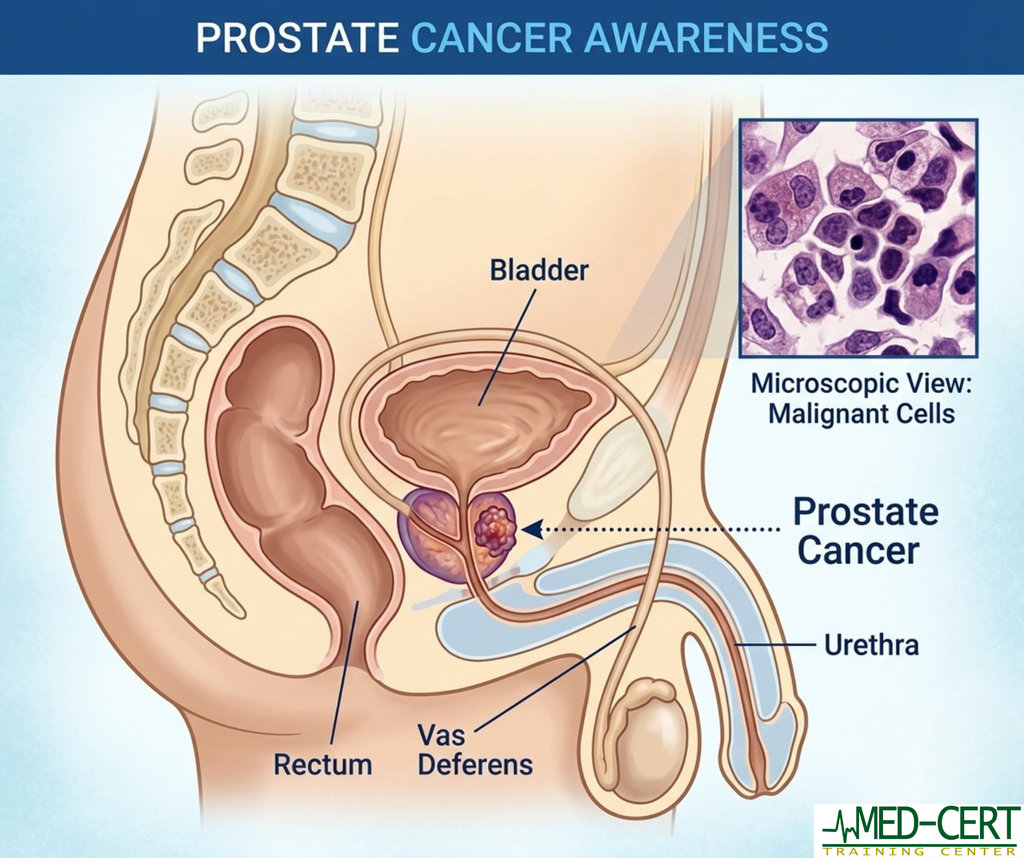
Some prostate cancers grow slowly and may remain localized for years, while others can be more aggressive and spread to other areas of the body. Because prostate cancer may not cause noticeable symptoms in its early stages, conversations with healthcare professionals about individual risk and screening can be especially important.
Know the Possible Warning Signs
Prostate cancer does not always produce early symptoms. When symptoms do occur, they can overlap with those of non-cancerous prostate conditions.
Possible signs may include difficulty starting or stopping urination, a weak or interrupted urine flow, frequent urination—particularly at night—blood in the urine or semen, pain or burning during urination, and persistent pain in areas such as the back, hips, or pelvis.
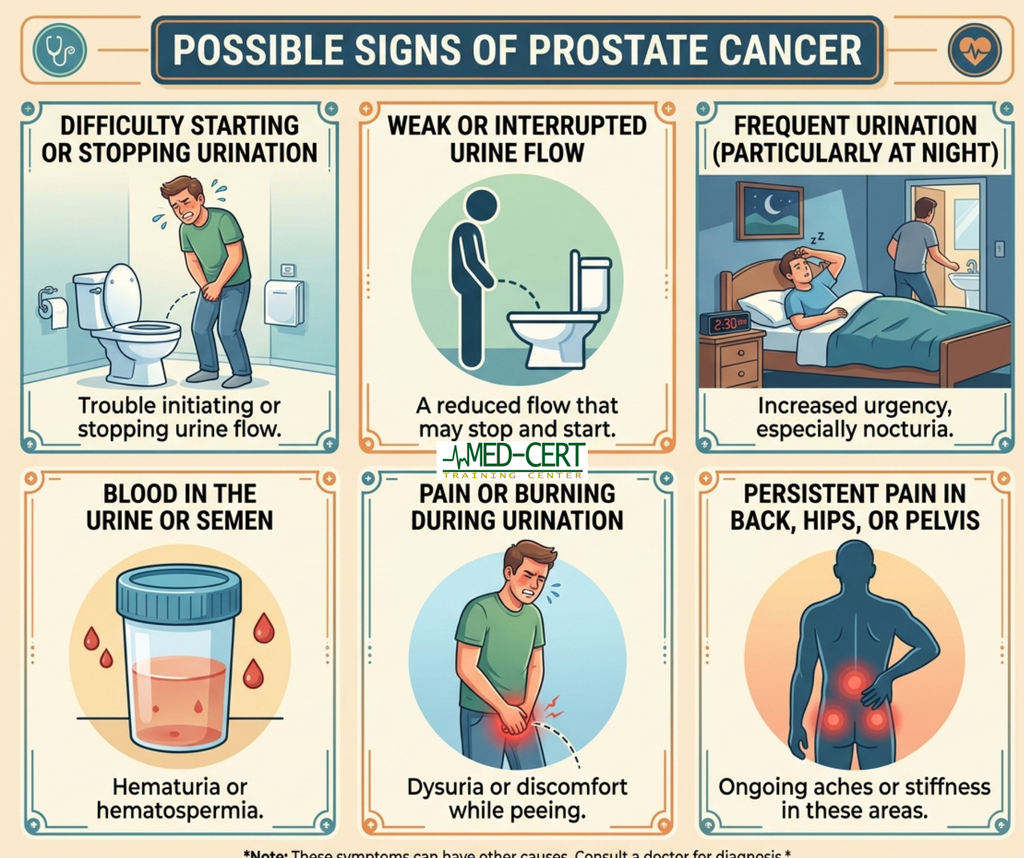
These symptoms do not necessarily mean someone has prostate cancer. Anyone experiencing persistent or concerning changes should consult a qualified healthcare professional for appropriate evaluation.
Understanding Prostate Cancer Risk
Risk can vary from person to person. Age is one of the most significant risk factors, with prostate cancer becoming more common as men get older. Family history and inherited genetic factors can also affect an individual’s risk.

Race is another important consideration. In the United States, Black men experience a higher incidence of prostate cancer and are more likely to die from the disease than men in many other racial and ethnic groups.
That makes access to reliable health information and conversations about individual screening decisions particularly important.
Why Awareness Matters for Future Healthcare Professionals
Prostate Cancer Awareness Month 2026 is also an opportunity for healthcare students to understand the importance of patient education and compassionate care.
Students pursuing healthcare training in Cleveland and Akron may eventually encounter patients undergoing cancer testing, treatment, recovery, or long-term care. Depending on their role and scope of practice, healthcare professionals such as CNAs, home health aides, phlebotomy technicians, and other support staff may assist with daily activities, collect specimens, monitor vital signs, observe changes, or communicate concerns to the appropriate clinical team.
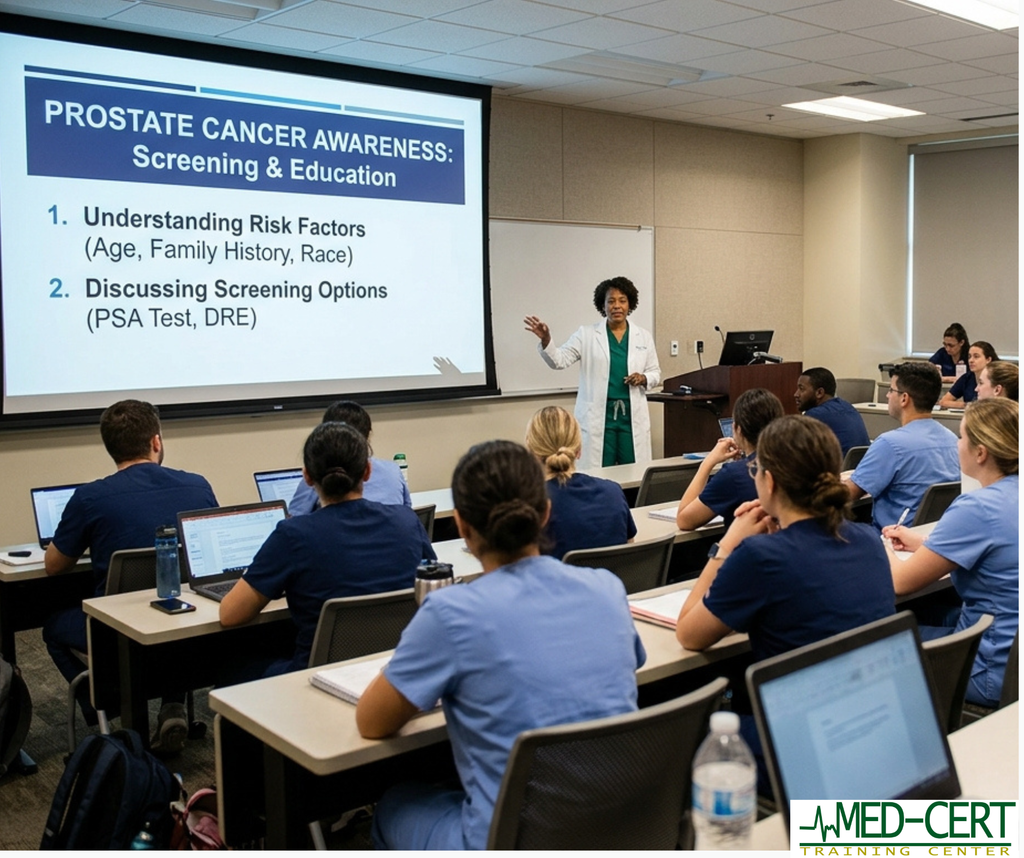
Cancer can affect much more than a person’s physical health. Patients may experience fear, uncertainty, fatigue, and emotional stress. Treating every patient with dignity, patience, privacy, and compassion is an essential part of quality healthcare.
Take Action During Prostate Cancer Awareness Month
Awareness begins with education. This September, encourage the men in your family and community to learn about prostate cancer, understand their personal risk factors, and talk with a healthcare professional about whether and when screening is appropriate.
For those interested in making a difference through a healthcare career, education is an important first step.

Med-Cert Training Center in Cleveland and Akron, Ohio provides career-focused healthcare training for students looking to build practical skills and prepare for opportunities in the growing healthcare field.

During Prostate Cancer Awareness Month, we encourage everyone to share knowledge, support those affected by cancer, and recognize the healthcare professionals who provide compassionate care throughout every stage of a patient’s journey.