Here’s How to Build a Complete First-Aid Kit for 2026
Accidents can happen anywhere—at home, at work, on the road, or during outdoor activities. Having a properly stocked first-aid kit can make a major difference when responding to minor injuries and managing an emergency until professional medical help arrives.
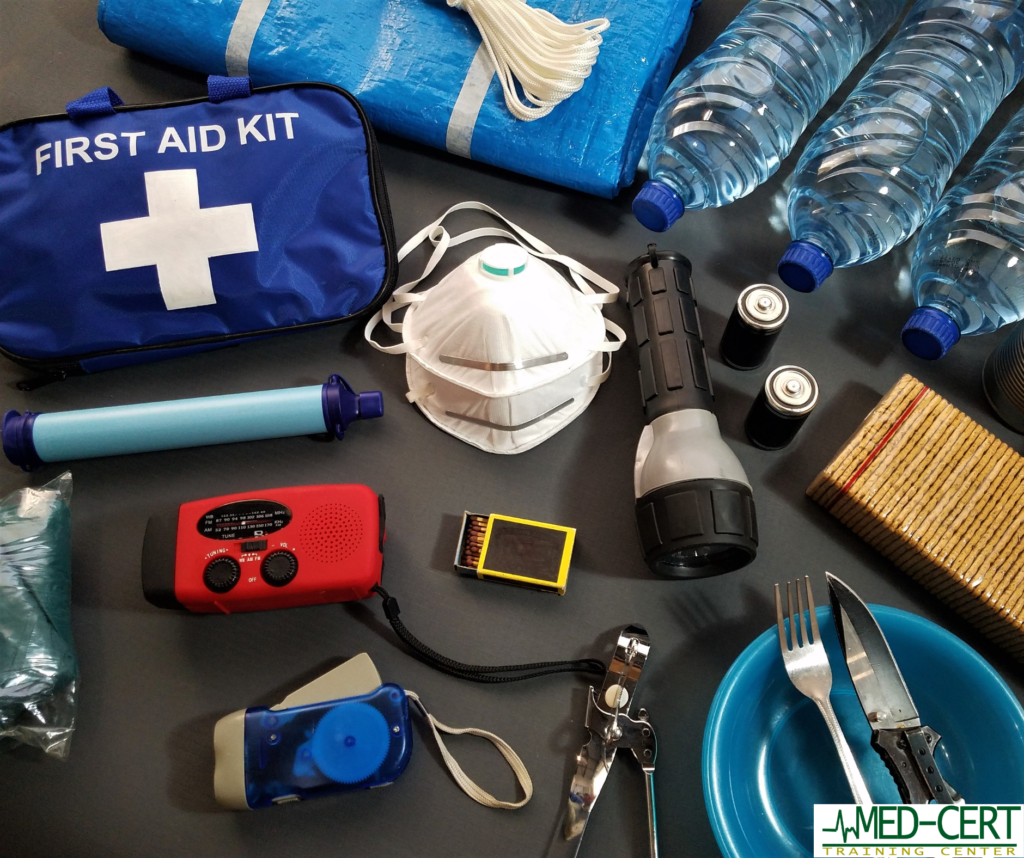
As we move through 2026, it is a good time to check your supplies, replace expired items, and make sure your first-aid kit matches your household or workplace needs. At Med-Cert Training Center, we believe emergency preparedness starts with having the right supplies—and knowing how to use them.
1. Start With Basic Wound-Care Supplies
Cuts, scrapes, and minor wounds are among the most common situations requiring first aid. Your kit should contain several sizes of adhesive bandages, sterile gauze pads, medical tape, antiseptic wipes, and disposable gloves.
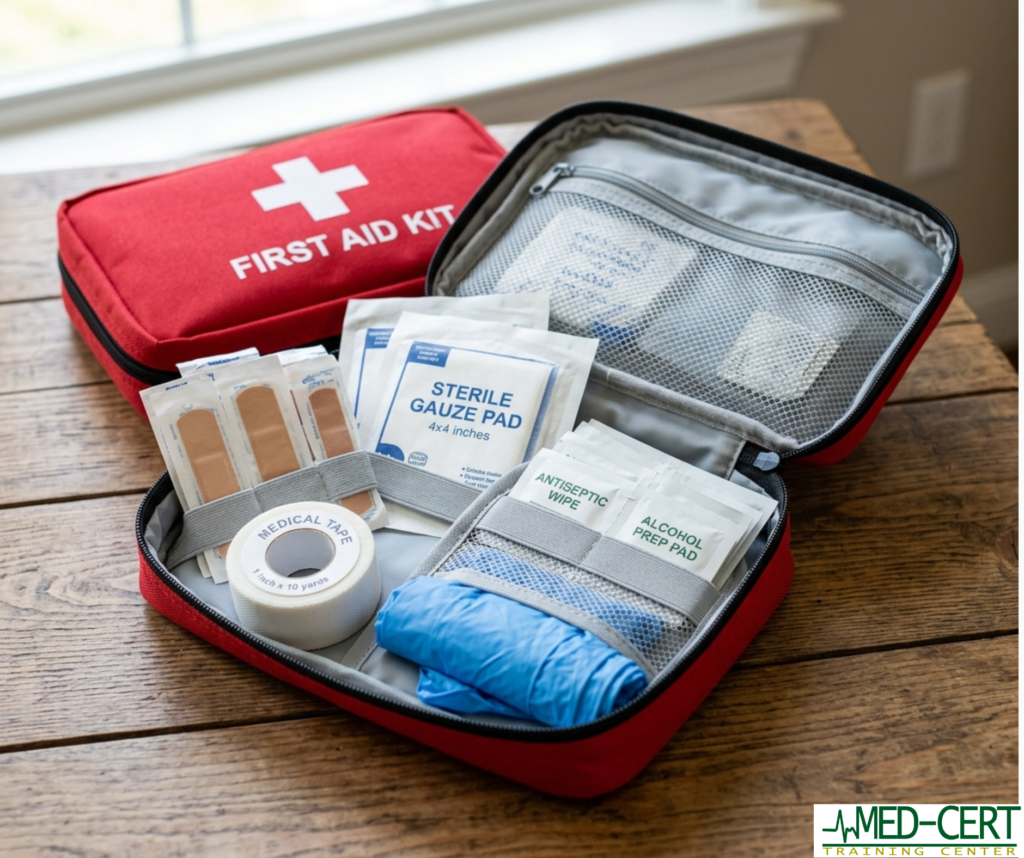
Consider including an elastic bandage for strains and sprains, along with sterile dressings for larger wounds. Check these supplies regularly and replace damaged, contaminated, opened, or expired products.
2. Add Essential First-Aid Tools
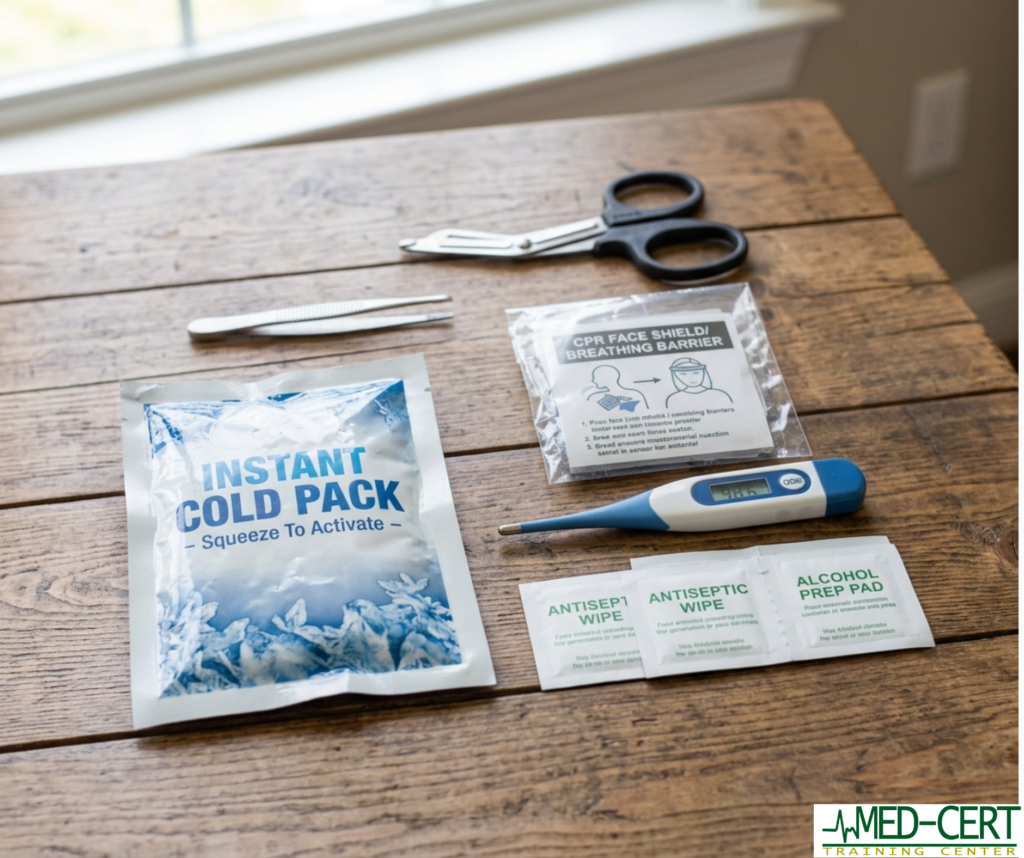
A complete first-aid kit should contain practical tools that can help you respond efficiently. Useful additions include blunt-tip scissors, tweezers, an instant cold pack, a digital thermometer, and a CPR face shield or breathing barrier.
A small flashlight can also be helpful during power outages, roadside emergencies, or situations where visibility is limited.
3. Include Appropriate Medications
Depending on who will use the kit, you may want to include commonly used over-the-counter medications, such as pain relievers and antihistamines. Any medication should be stored according to its label and checked regularly for expiration dates.
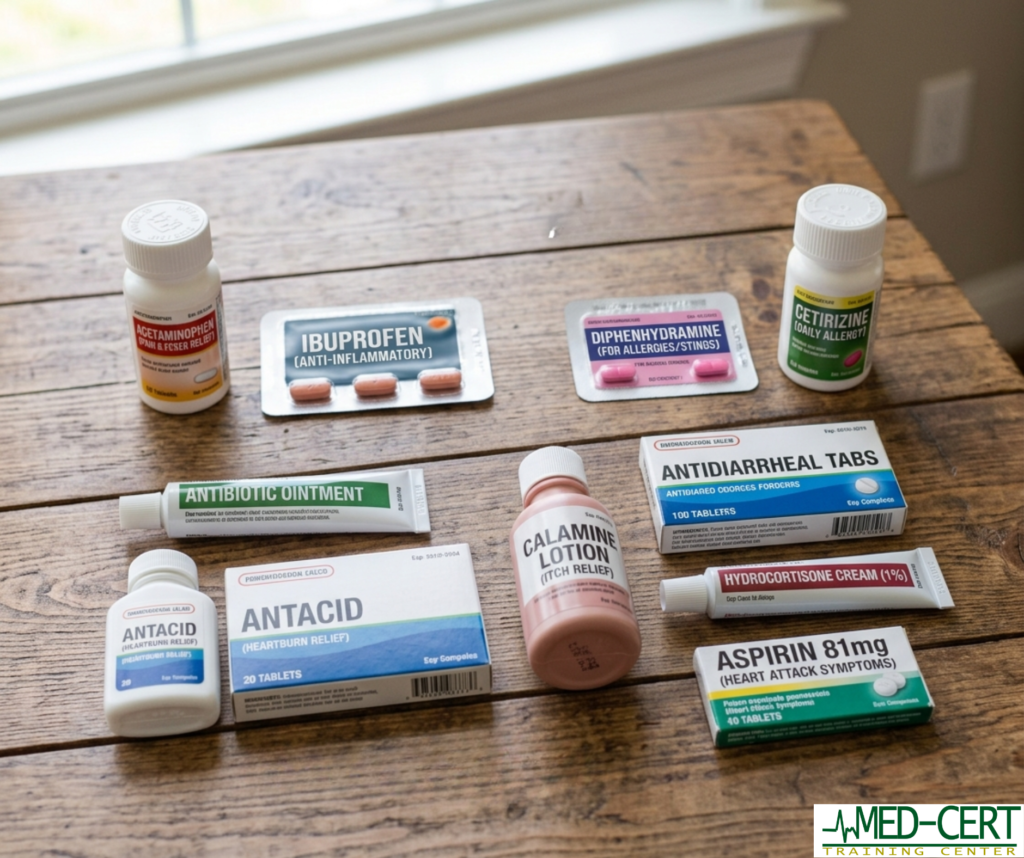
For workplaces and organizations, follow applicable policies and regulations regarding medication storage and administration.
4. Customize Your Kit for Your Location
There is no single first-aid kit that works perfectly for every situation. A family kit may differ from one used at a construction site, office, school, vehicle, or healthcare setting.
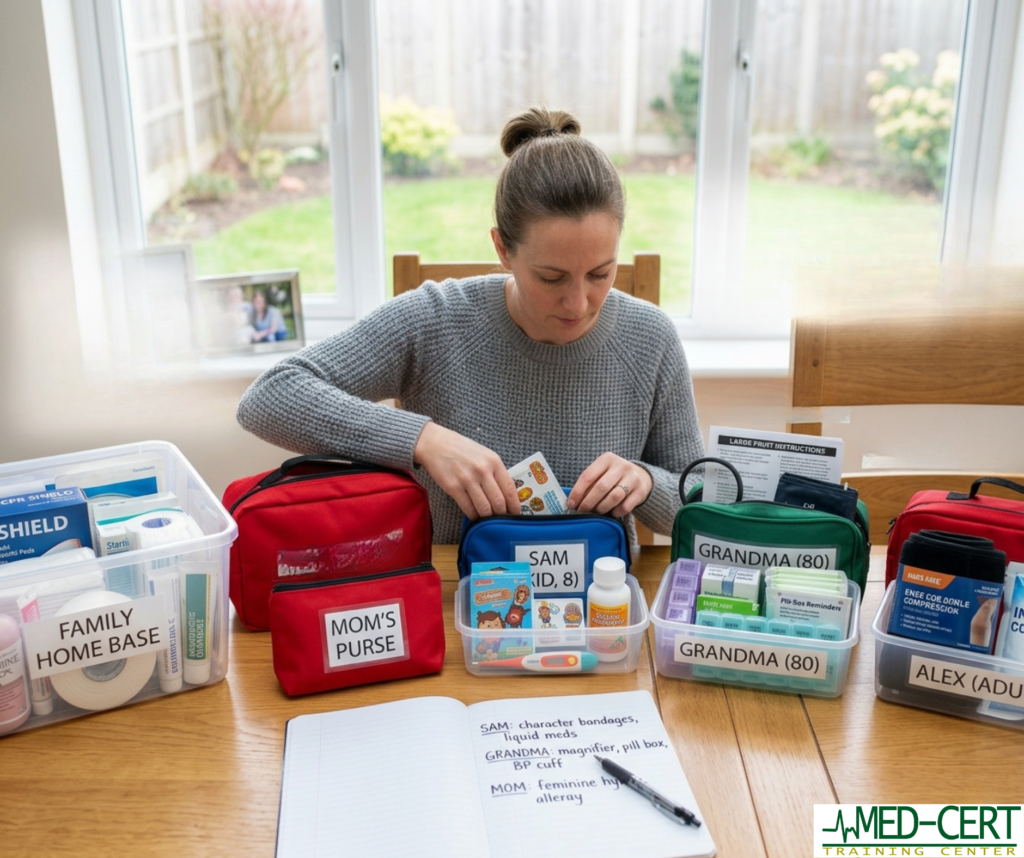
Residents and businesses looking for first-aid training should consider both the types of emergencies they may encounter and how quickly emergency medical services can be reached. Keeping separate kits at home, in your vehicle, and at work can provide additional preparedness.
5. Don’t Forget Emergency Information
Your kit should also include important emergency contact information and basic first-aid instructions. Family members should know where the kit is stored and how to access it quickly.

However, supplies alone are not enough. Knowing what to do during an emergency can be just as important as having the right equipment.
6. Get Professional First-Aid and CPR Training
A well-stocked first-aid kit is only as useful as your ability to use it correctly. That’s why proper first-aid and CPR training is an important part of emergency preparedness.
At Med-Cert Training Center, we help students, caregivers, healthcare professionals, and individuals develop practical skills and confidence for responding to emergencies. Our training programs are designed to provide valuable, hands-on knowledge that can be applied at home, in the workplace, and in healthcare environments.
If you are searching for first-aid training, CPR training, healthcare certification programs, medical career training, or healthcare training near you, Med-Cert Training Center can help you take the next step.
Learning first aid and CPR can help you recognize emergencies, respond appropriately, and provide essential assistance while waiting for professional emergency medical services to arrive.
Make First-Aid Preparedness a Priority in 2026
Building a complete first-aid kit is a simple step toward creating a safer home, workplace, or vehicle. Review your kit periodically, replenish used supplies, check expiration dates, and make sure everyone knows where it is located.
Most importantly, pair your emergency supplies with practical knowledge. Med-Cert Training Center is committed to helping students and professionals build valuable healthcare and emergency-response skills.
Prepare your first-aid kit for 2026—and prepare yourself with the training to use it when it matters most.